


Friends
Amigos
Zanmi
BOOK DESCRIPTION
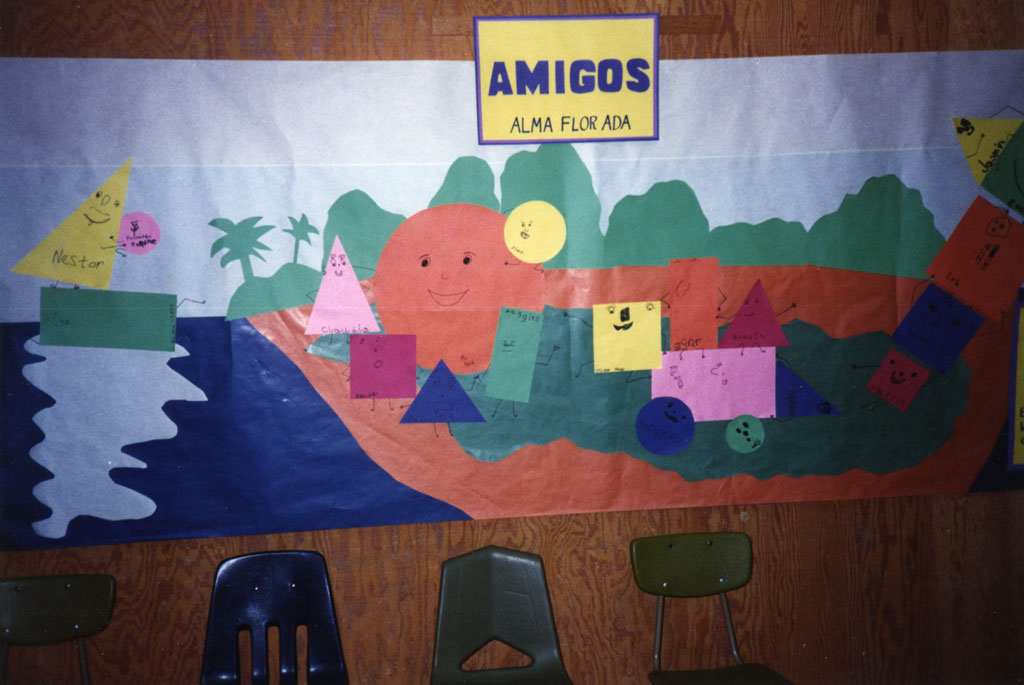
The characters of this powerful story in celebration of diversity are all geometrical figures –squares, rectangles, circles and triangles—who stick to their own kind and teach their young not to mix with others. However when two little circles take a roll into town, they discover for themselves the joy of making new friends. This anti-bias book explores symbolically issues of discrimination at a level accessible even to the younger children, and promotes appreciation of others.
Teachers of young children appreciate that through this story children learn, or practice, the names of colors, the concept of sizes, and, of course, the different geometrical shapes. Children seem to be touched by the deep message of the story.
CD AND CASSETTES DESCRIPTION
There is a special value to listening to a books read by the author. Such recordings show just where the author wishes to convey feelings and emotions, emphasis and suspense. When the text is put to music it acquires additional interest for children.
The special nature of each of these books led to them to very different and exciting recordings.
This powerful tale of celebration of diversity has been read both in English and in Spanish by Alma Flor Ada. The listeners of the recording in Spanish will have a complementary experience. Alma Flor has rewritten the story in verse and Suni Paz has created music for the version in verse. Her beautiful performance gives additional charm to this poignant story of multicultural understanding.
CD (Stories For The Telling) includes Friends, How Happy I Would Be, The Song of the Teeny-Tiny Mosquito, Strange Visitors, Who’s Hatching Here?
AUTHOR’S NOTE
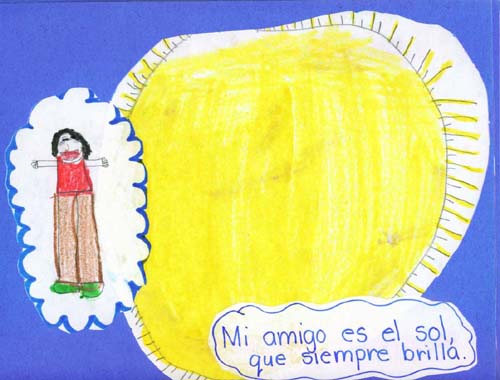
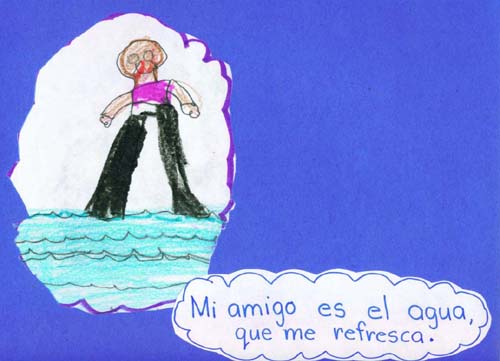
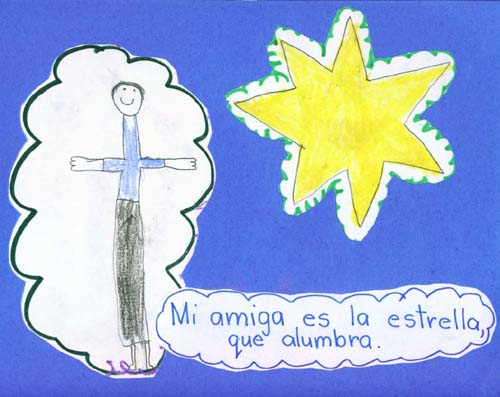
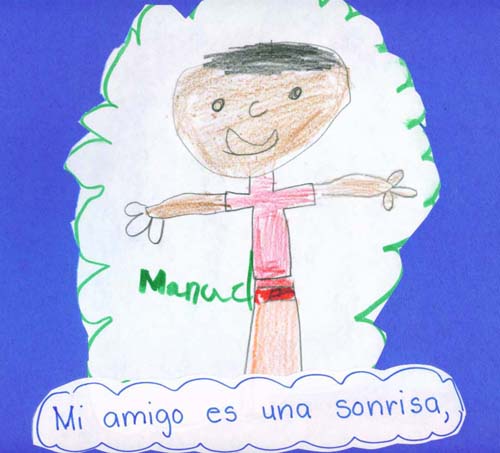
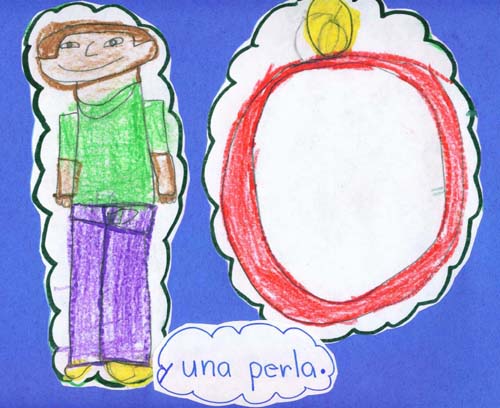
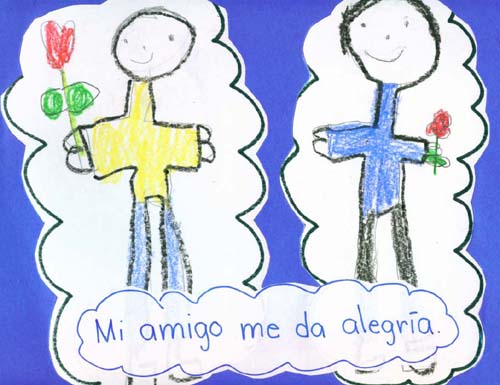
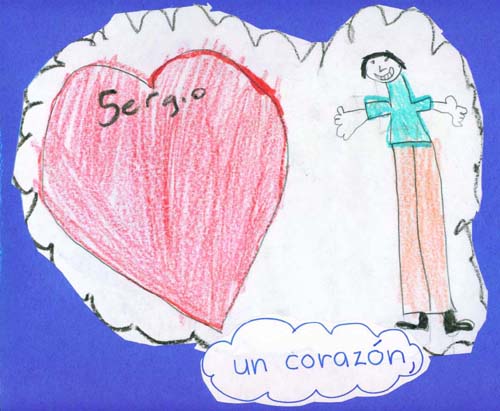
It has been a great joy to listen to young children tell me how much they like this book, and how good it makes them feel that the book recognizes that we can all be friends, regardless of what we look like.
This is the second of my stories with geometrical characters. The first is “El cuadradito azul” [The little blue square] included in the book Exploramos from the HAGAMOS CAMINOS reading series (Addison-Wesley). In that first story a little blue square wishes he could be any other figure, a circle or an oval, but not a square, until his grandmother points out to him all the potentials that he holds. The third book with geometrical figures as characters is El reino de la geometría which takes the results of discrimination a step further.
Amigos was my very first book published in the United States as an Individual trade book, and it started my association as an author with Santillana/Alfaguara.
REVIEWS
School Library Journal
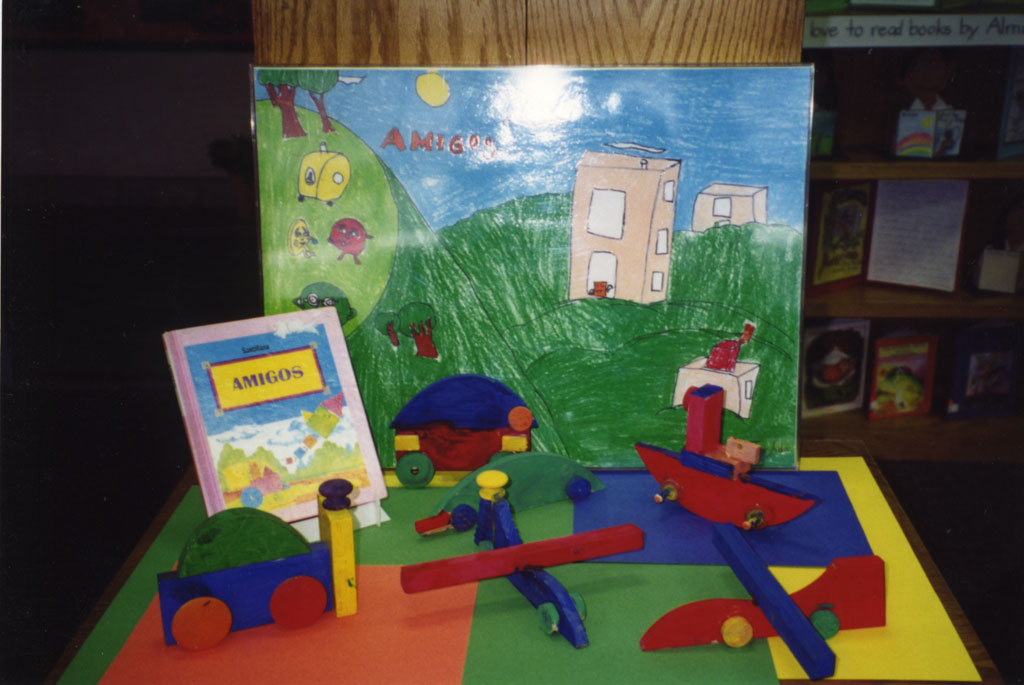
PreS-Gr 1– An introduction to basic shapes featuring brightly colored illustrations. Squares, rectangles, triangles, and circles are limited to playing and associating only with others just like themselves, until they discover the creative possibilities of being friends with those who are different. In the end, the various shapes combine to make wagons, locomotives, and boats.
FRIENDS MINI-LESSON USING THE CREATIVE DIALOGUE PROCESS
Download Friends Mini-Lesson as Word Document
Friends (in Spanish Amigos, in Haitian Creole Zanmi) by Alma Flor Ada describes the life of squares and rectangles, circles and triangles who live in the same town but keep very separate lives from each other. One day, two little circles went for a roll into town and met a small rectangle. Together they formed a wagon. Later with young squares they made a train and when little triangles joined them they could make a plane and fly. They learned that together in friendship they could do what they could not do separate.
CREATIVE DIALOGUE
These questions are samples that can prompt the dialogue for each phase. Of course, the beauty of the real dialogue is that it will incorporate real life situations and experiences of the children. The questions are only suggested as dialogue starters. They need not be asked separately, but in a normal conversation format. We separated them into phases to give an idea of the different purpose of each phase, particularly because the conversations in the class tend to remain at the Descriptive and Personal phases and not reach the very important Critical Refletive phase and the essential Creative Phase that leads to action.
Descriptive Phase
Questions to ascertain the comprehension of the story and its concepts.
- How many sides does a square have? Are all sides the same size?
- How many sides does a rectangle have? A triangle? Do circles have sides?
- What did the large figures say to the little ones?
Personal Interpretive Phase
Questions to invite sharing personal experiences, feelings and emotions.
- How does it feel when other children want to play with you? When they don’t?
- How does it feel when other people treat you badly? When you treat others badly?
Critical Multicultural Anti-Bias Phase
Questions to promote critical reflection and anti-bias awareness.
- Was the big squares’ reason to forbid the little ones to play with others valid? Why??
- Do all people who have long hair (or live in the same street) think alike? Have the same taste? Can we tell the feelings of a person just by the way the person looks? By the person’s language? The person’s origin? What do you think of this?
- Why do you think the shapes had such a wonderful time playing together?
- What difficult things that can happen when people who are different play together?
- What good things can happen? How can we promote the good things?
Transformative Creative Phase
Questions to promote transformative attitudes.
- What can we do when there are children who do not want to play with us?
- What can you do if you see someone treating someone badly?
- Is there someone you have not been friends with that you can invite to play with you? Someone you can learn to know better?
CONNECTIONS WITH THE HOME
Invite parents to share with their children their own experiences with friends, now and when they were children. What were their favorite games and activities? Ask them to discuss their concept of friendship. What do they value in their friends? Can these qualities be found only in people of the same age, the same sex, the same language, the same ethnicity?
PERFORMING THE STORY
The story Friends is easy to be turned into a play without great difficulty. Teachers working with Spanish speaking students can use the dramatized version included in the theatre anthology Escenas y alegrías. Since the text in verse included text is the same Suni Paz has put to music they could even perform the story as a musical following the Stories for the Telling CD!
READERS’ RESPONSES
If you have enjoyed reading or sharing this book, I would very much like to hear from you. Please click here to send your comments.
